L-Shaped Kitchen Cabinets Manufacturers & Exporters serving the Equatorial Guinea market

Custom Engineering, Advanced Moisture Resistance, and Industry 4.0 Supply Chain Integration for Modern Residential Developments in Malabo, Bata & Beyond.

Send Inquiry Now Download Technical Spec
HMR
High Moisture Resistant
Ideal for equatorial humidity
E0 / E1
Eco-Board Standards
Formaldehyde emission safety compliance
CNC
Industry 4.0 Cutting
Zero-tolerance dimension accuracy
100%
RTA Export Efficiency
Optimized logistics to Malabo & Bata ports

1. Market Landscape: Equatorial Guinea’s Real Estate Boom & Urbanization

Equatorial Guinea, particularly through the rapid modernization of Malabo II and the expanding urban zones of Bata, is witnessing a massive transition in both residential and commercial real estate. In the coastal tropical climate of Central Africa, housing infrastructure requires highly specialized interior fixtures. Traditional millwork, often fabricated on-site from green wood, frequently suffers from warping, mold, and joint degradation due to the intense humidity levels characteristic of the region.

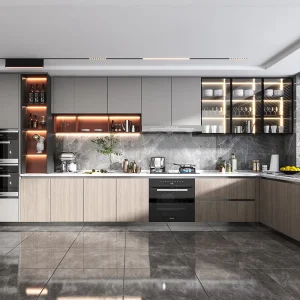
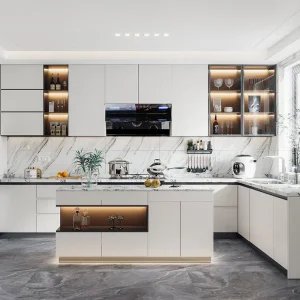
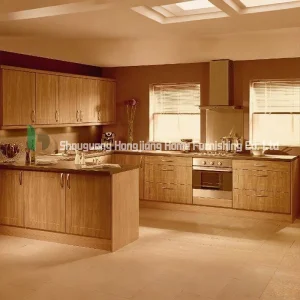
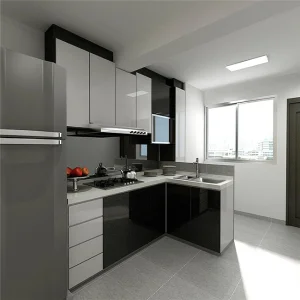
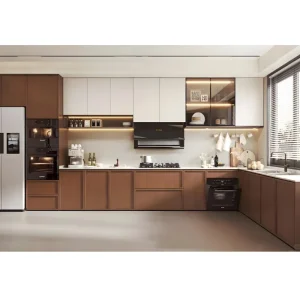
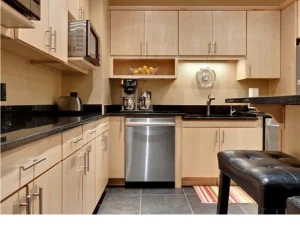
Consequently, property developers, government contractors, and private villa builders are increasingly shifting toward pre-engineered, modular kitchen cabinet solutions. The L-shaped kitchen layout has emerged as the premier structural standard. By capitalizing on two adjacent walls, it maximizes corner spaces and optimizes traffic flow, offering an ergonomic configuration that accommodates both spacious villas and compact urban apartments.

Critical Local Parameter: Malabo and Bata experience average relative humidity levels exceeding 80% year-round. Ordinary particleboard cabinets collapse or swell within 24 months. Modern project specifications now strictly demand green-core HMR (Highly Moisture Resistant) MDF or marine plywood bases bonded with PUR hot-melt adhesives.

1.1 The Coastal Architectural Paradigm

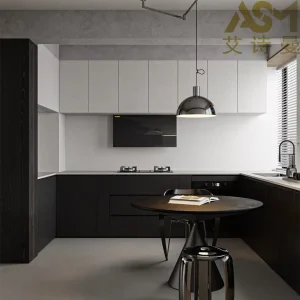
Modern West and Central African architecture blends European modernist lines with deep verandas and open-plan interiors. The kitchen has shifted from a closed-off utility room to the central hub of social interaction. This transformation requires kitchen cabinets to not only be highly structural but also display clean aesthetics. Flat-panel, handleless modular L-shaped cabinets with integrated appliance bays represent the majority of inquiries from Malabo-based architecture firms.

2. Global Design & Procurement Trends: Why L-Shaped Cabinets?

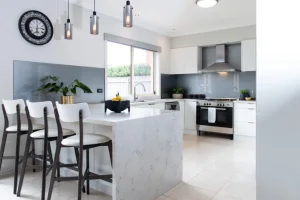
From a global design perspective, L-shaped kitchen configurations are preferred because they respect the classic "Kitchen Work Triangle"—the distance between the stove, sink, and refrigerator. By placing these primary workstations on two intersecting axes, movement is streamlined, and congestion is minimized.

Furthermore, global B2B procurement data shows that L-shaped layouts allow for modular scalability. They can be shipped flat-packed, and on-site installers can adjust filler panels to accommodate variations in masonry walls. This flexibility is highly advantageous in Equatorial Guinea, where civil construction tolerances may vary. Modular units allow quick, tool-based assembly, drastically reducing construction times on large residential projects.

2.1 Adaptability & Open-Plan Integration

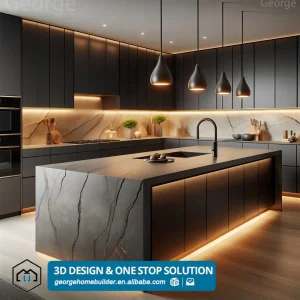
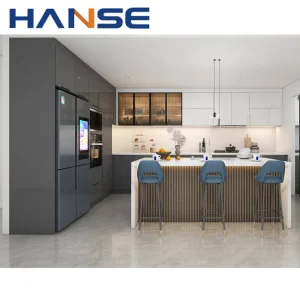
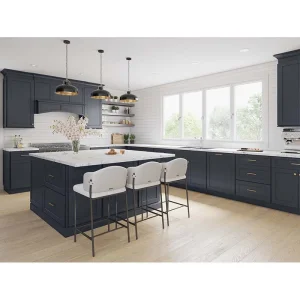
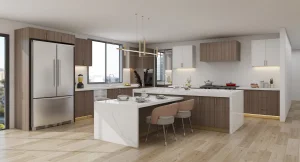
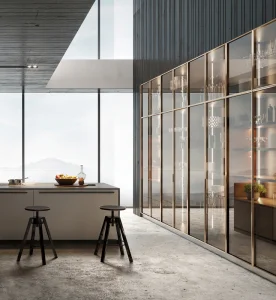
L-shaped designs are highly adaptable to the addition of a kitchen island or a dining counter. In luxury developments located in Oyala (Ciudad de la Paz) or modern estates in Bioko Norte, L-shaped base cabinets along the walls are paired with a large central quartz-topped waterfall island, doubling as a cooking prep area and an informal dining bar. This structural adaptability increases property valuation and accelerates sales cycles for real estate investors.

3. China’s Factory 4.0: Supply Chain Resilience & Manufacturing Prowess

To supply high-performance, cost-effective modular cabinetry, international builders rely heavily on China's advanced manufacturing hubs, particularly Foshan. The Foshan furniture cluster represents the global benchmark for automated panel processing and raw material supply chain consolidation.

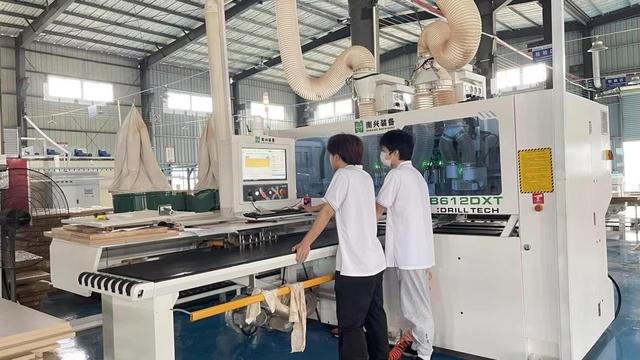
China's Factory 4.0 integration involves computer-driven CNC routers, automatic edge-banding machines (such as HOMAG and BIESSE), and automated packaging lines. Digital workflows transition designs directly from CAD software to nesting programs, minimizing material waste and ensuring dimension tolerances within fractions of a millimeter. This level of accuracy is critical for RTA (Ready-to-Assemble) systems destined for West Africa, where replacement components cannot be easily sourced locally.

  • Automated Edge Banding: PUR (Polyurethane) adhesive technology creates a seamless, heat-proof, and waterproof seal around panels, preventing moisture ingress.
  • High-Precision CNC Drilling: Predrilled pilot holes for hinges and cam-locks ensure that local assembly in Bata is fast and error-free.
  • Hardware Integration: Standardization with international hardware brands like Blum, DTC, or Hettich ensures soft-closing performance that stands up to decades of wear.
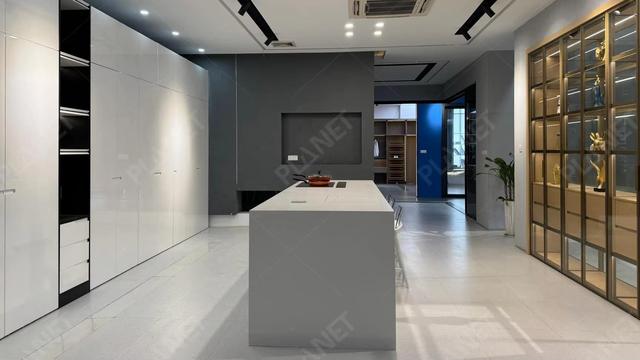
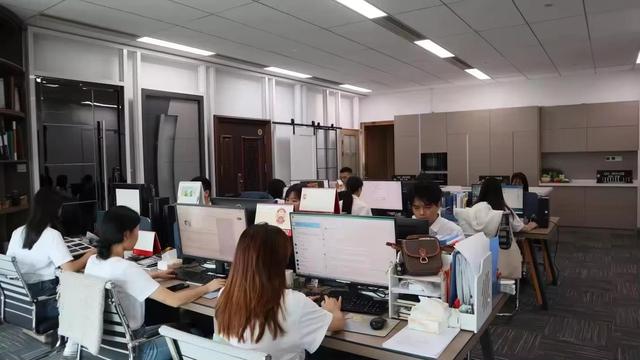
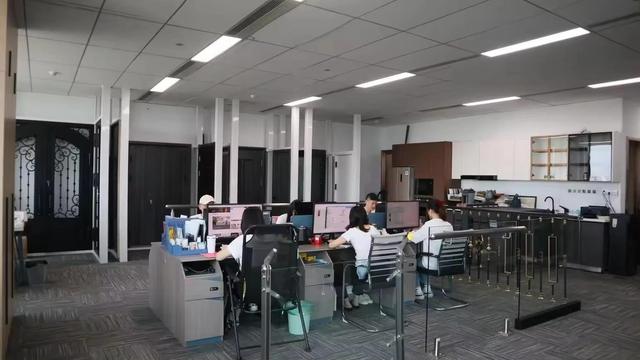
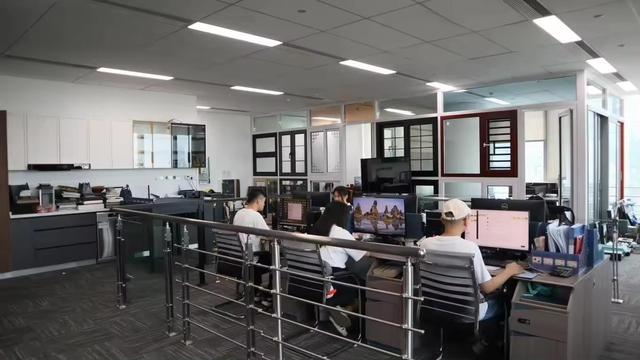
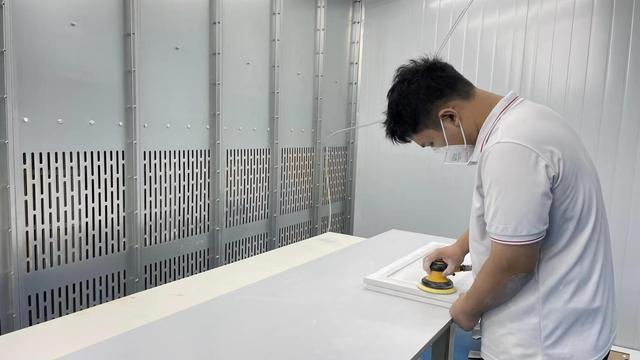
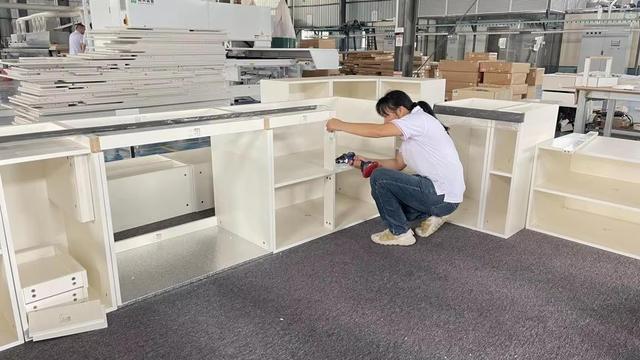
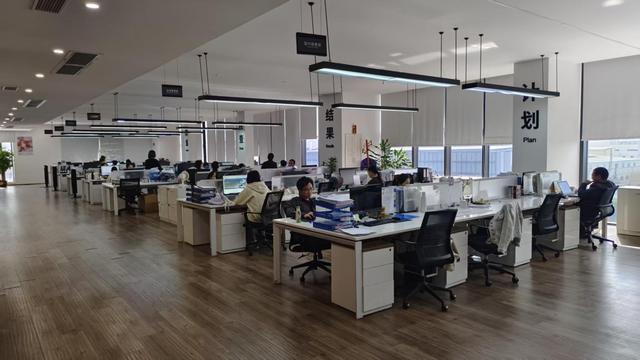
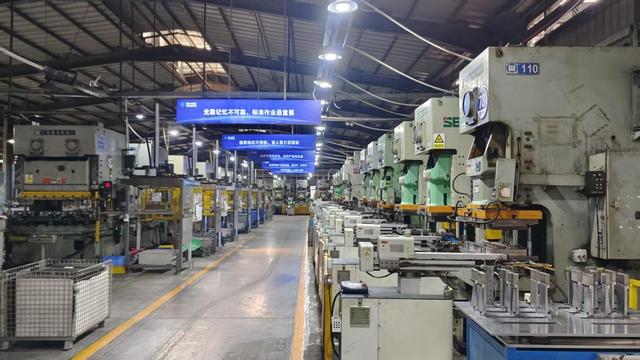
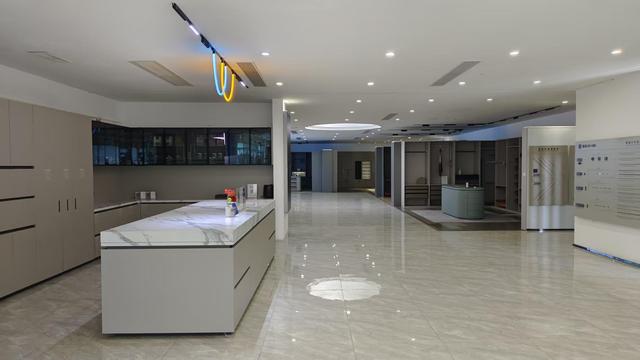
Inside Foshan Bashan Living: Manufacturing and Quality Inspection Facility

4. Material Science for Tropical and Coastal Climates

Moisture-Resistant Substrates

Highly Moisture Resistant (HMR) green-core MDF and marine plywood serve as the critical backbone for base cabinets, ensuring dimensional stability in high humidity coastal zones.

Premium Surface Protection

High-pressure melamine overlay, scratch-resistant lacquers, and heavy-duty PVC thermofoils create a highly resilient surface layer that resists mold, grease, and household chemicals.

Sealed Edge Technology

Industrial laser and PUR edge-banding machinery seal all raw panel edges, establishing a physical barrier against humidity and potential insect infestation.

5. B2B Sourcing, Shipping, and Logistics to Equatorial Guinea

Procuring custom kitchens from China for West African projects requires careful attention to logistics. To optimize shipping costs, modular kitchens are typically packed as RTA (Ready-to-Assemble) or Flat-Pack systems. Flat-packing reduces shipping volume by up to 70% compared to pre-assembled cabinets, allowing developers to maximize the loading capacity of 20GP or 40HQ ocean containers shipping out of Shenzhen, Nansha, or Guangzhou ports.

Our logistical engineering team coordinates closely with sea carriers servicing key destinations, including the Port of Malabo and the Port of Bata. We ensure all custom clearances are accompanied by compliant bill of lading (B/L) documentation, certificate of origin, and comprehensive packing lists showing clear numbering corresponding to structural installation drawings.

Shipping Tip: Always secure 3% to 5% additional spare hardware (screws, dowels, cam locks, drawer runners, and hinge packs) within each container shipment. This protects projects from delays caused by minor on-site losses during installation.

Technical Q&A for Architectural Consultants & Contractors

Critical engineering answers for sourcing and installing modular cabinetry in Central African environments.

What is the optimal substrate recommendation for developments in Malabo and Bata?

For dry zones and upper cabinets, E0-grade moisture-resistant MDF is highly effective. However, for base sink units and coastal properties, we recommend green-core HMR (Highly Moisture Resistant) MDF or marine plywood with a melamine overlay, assembled using PUR adhesive to prevent swelling or mold growth.

How are large commercial project orders managed, and what is the typical lead time?

Upon receiving project drawings, our engineering team generates 3D CAD/CAM models for approval within 48 hours. Once approved, the production time for a standard 40HQ container (approximately 80 to 120 kitchen units) is 30 to 35 days. Sea transit from Foshan/Shenzhen to Malabo Port or Bata Port typically ranges between 35 and 45 days.

Do you offer custom sizing, or are your units restricted to modular standards?

We offer a hybrid modular system. While we maintain standardized cabinet widths (300mm, 450mm, 600mm, 900mm) to optimize manufacturing speed and B2B pricing, we provide fully customized filler panels, corner cabinets, and custom tall units to fit any architectural room layout.

What certifications do your panels and adhesives carry for environmental safety?

All board stock complies with China National Green Standards and international emission limits, including CARB Phase 2 and EPA TSCA Title VI. Adhesives used in laminating and edge banding have passed ISO 14001 environmental management system certifications, ensuring minimal indoor air pollution.

Initiate Sourcing Consultation

Connect with our engineering specialists. Receive detailed 2D/3D layouts, exact container packing volumes, and competitive B2B wholesale pricing customized for the Equatorial Guinean market.

Send Inquiry Now

Modern & Classical Modular Systems

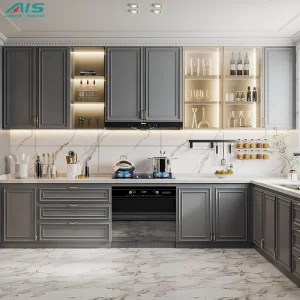
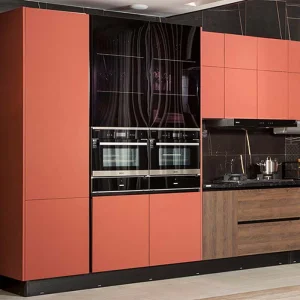
Explore our complete collection of L-shaped, U-shaped, and luxury customized configurations.