Choosing the right colors for modern kitchen interiors can be overwhelming. Expert interior designer Sarah Thompson emphasizes, "Color can transform a space completely." With countless shades and combinations available, knowing how to choose colors for modern kitchen interiors is key to creating a harmonious environment.
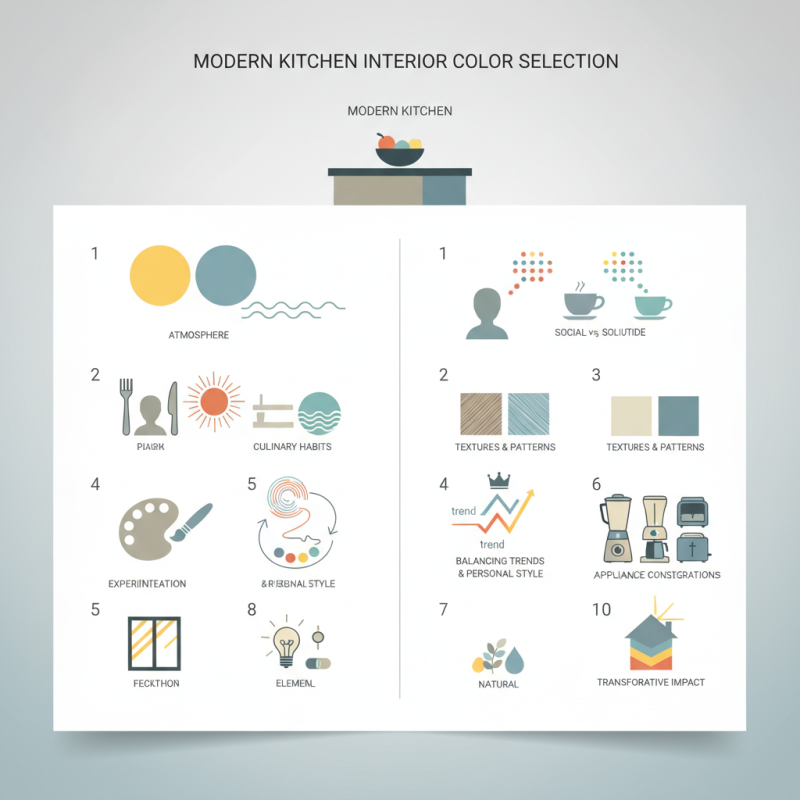
When selecting colors, consider the atmosphere you want to achieve. Bright colors can energize, while muted tones provide calm. Be mindful that personal preference should guide your choices. It’s essential to reflect on your culinary habits. If you often entertain, warmer hues might enhance the social atmosphere. However, if you enjoy solitude, cooler shades may suit you better.
Incorporating textures and patterns is another layer to consider. Use paint, cabinetry, and accessories to experiment. Remember, the journey of choosing colors isn’t always straightforward. Sometimes, it may lead to unexpected outcomes that require reevaluation. Balancing trends and personal style makes the process both rewarding and challenging. Choosing wisely can elevate your kitchen from mundane to magnificent.
Choosing colors for modern kitchen interiors requires an understanding of color psychology. Colors can significantly affect moods and behaviors. For instance, warm tones like red and orange can stimulate appetite. A study from the Institute of Color Psychology indicates that red can increase energy levels, making it an engaging choice for kitchens.
Cool colors, like blue and green, promote relaxation. They can transform a bustling kitchen into a calming space. A survey by the National Kitchen and Bath Association (NKBA) found that 48% of homeowners prefer blue tones in their kitchen design. This trend is tied to the psychological effects these colors have on stress levels. Additionally, green connects with nature, often inspiring a feeling of freshness.
It’s essential to reflect on how different colors align with your lifestyle. A vibrant yellow may energize a busy family kitchen but could be overwhelming over time. Some might find gray tones too cold or sterile. Testing paint samples in different lighting can lead to surprising outcomes. Only then can a homeowner find a balance that feels both functional and aesthetically pleasing.
| Tip Number | Color Choice | Psychological Effect | Best Complementary Colors |
|---|---|---|---|
| 1 | Soft White | Simplicity and cleanliness | Pastels, earthy tones |
| 2 | Cool Gray | Calmness and sophistication | Bright colors, navy blue |
| 3 | Bold Blue | Trust and reliability | White, yellow accents |
| 4 | Sunny Yellow | Happiness and energy | Gray, charcoal |
| 5 | Earthy Green | Balance and growth | Neutrals, woods |
| 6 | Rich Red | Passion and excitement | Navy, beige |
| 7 | Soft Beige | Warmth and comfort | Warm colors, terracotta |
| 8 | Light Lavender | Relaxation and tranquility | Gray, white |
| 9 | Warm Coral | Energy and enthusiasm | Turquoise, teal |
| 10 | Charcoal Black | Sleekness and elegance | Gold, silver |
: Colors affect moods significantly. Warm tones stimulate appetite, while cool tones can promote relaxation.
Blue and green are popular choices. They help reduce stress and create a calming atmosphere.
Yes, vibrant colors like yellow can energize but may feel overwhelming over time. Balance is key.
Neutral colors soften bold hues. They help create a calm backdrop, ensuring cohesion in design.
Testing paint samples in different lighting is crucial. It reveals how colors look throughout the day.
Bold colors can be used in smaller areas like backsplashes or light fixtures, adding character without overcommitting.
Absolutely. A daring color may not suit every cooking style or home atmosphere. Personal needs matter.
Balancing colors maintains harmony. Too much of one color can create an overwhelming visual experience.
Yes, some people find gray tones too cold or sterile. Personal preference plays a significant role.
Reflect on how colors make you feel. The right choice should enhance daily activities and personal comfort.
When it comes to how to choose colors for modern kitchen interiors, understanding color psychology is essential. The hues you select can significantly influence the mood and functionality of the space. Begin by choosing a color palette that mirrors your personal style—whether you lean towards calming neutrals or vibrant hues. It's important to strike a balance between bold colors that make a statement and neutral tones that promote a serene atmosphere in contemporary kitchen designs.
Moreover, incorporating natural light and considering the spatial layout can further enhance your color choices, ensuring the kitchen feels open and inviting. Staying updated on current trends in color combinations can also inspire innovative ideas for your kitchen, allowing you to blend classic styles with modern aesthetics seamlessly. By following these tips, you can create a beautifully coordinated kitchen that reflects both your personality and the latest design trends.

 Bashan Living