Kitchen clutter rarely appears all at once. It builds around crowded drawers, mismatched containers, and appliances left on the counter. Before long, finding a clean chopping board becomes a small daily annoyance. Knowing how to reduce kitchen clutter effectively starts with noticing which items earn their space and which simply make cooking harder.
Professional organizer Marie Kondo offers a useful guiding question: “The question of what you want to own is actually the question of how you want to live your life.” Her advice, shared in The Life-Changing Magic of Tidying Up, encourages people to choose belongings deliberately. Applied to the kitchen, that means keeping tools that support the meals you actually make—not an imagined version of your routine. A rarely used gadget may be better stored elsewhere. Or passed along.
China Best Organizers can help make the remaining essentials easier to manage. Drawer dividers can separate utensils, while stackable containers can make better use of shelf height. Clear bins can keep tea packets or baking supplies visible, so forgotten items are less likely to accumulate. Small changes matter. Still, organizers are not magic: buying more storage before sorting can simply create another crowded shelf. This guide looks at practical ways to assess your kitchen, choose useful organizers, and maintain a setup that suits your habits. It may take a few adjustments to get right. That is part of the process.
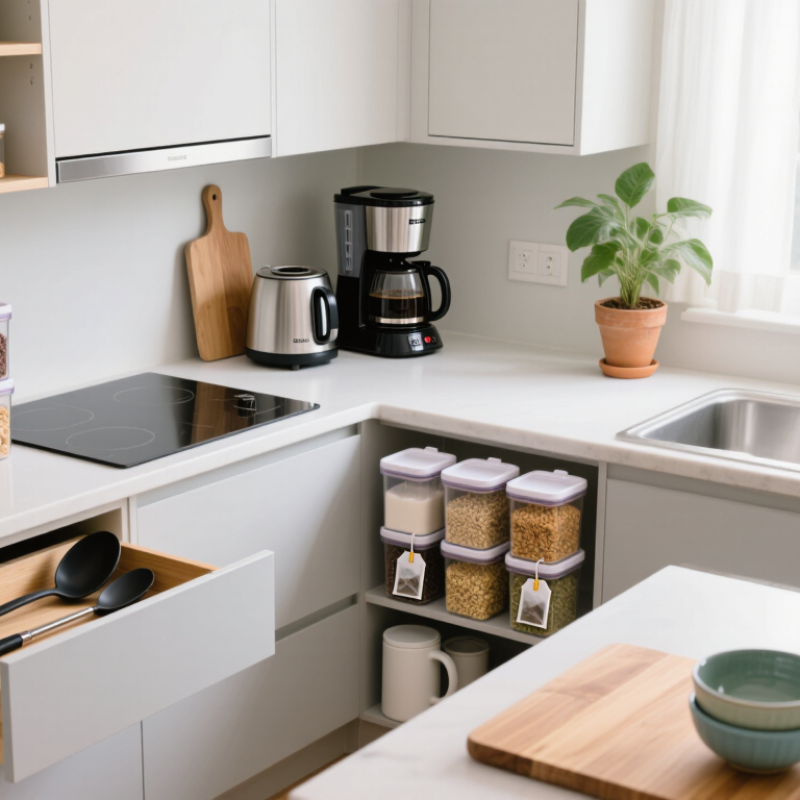
Before choosing organizers, empty one cabinet or drawer at a time. Group plates, bowls, cups, lids, and serving pieces by how often you use them. Keep everyday dishes near the dishwasher or prep area; holiday china can live higher or farther away. A shelf full of rarely used mugs may look orderly, yet still waste the easiest space.
Look for specific trouble spots. Do plates lean against one another? Do lids slide behind pots? Measure shelf width, depth, and clearance before buying racks or stackable bins. A few centimeters can decide whether a pull-out tray glides smoothly or catches. Note cabinet height too, especially if you want to store tall pitchers. Measure twice. It saves returns.
Pay attention to your routine for several days. If breakfast bowls pile up beside the sink, place them within easy reach rather than in a distant cupboard. Count the pieces you actually use, not every item you own. That number may change after a busy week or a family visit. Be honest about it. Sometimes the problem is not a lack of organizers, but too many dishes competing for one shelf. Write down the storage needs before comparing organizer materials, shapes, or price.
| Kitchen Area | What to Assess | Example Clutter Count | Storage Need | Practical Organizer or Action | Priority |
|---|---|---|---|---|---|
| Everyday dishes | Count plates, bowls, and cups used regularly; check whether stacks are difficult to reach. | 12 plates, 12 bowls, and 10 cups for a 2–4 person household | One accessible shelf with enough room to separate daily-use items from occasional pieces | Use an adjustable shelf riser or plate rack; store less-used serving dishes on a higher shelf. | High |
| Food-storage containers | Check for unmatched lids, duplicate containers, and items that do not fit inside one another. | About 20 containers with 8 unmatched or rarely used pieces | A defined cabinet section for nested containers and vertically sorted lids | Keep matching sets, nest containers by shape, and use a divided lid organizer. | High |
| Dry goods and pantry items | Look for expired food, duplicate open packages, and items hidden at the back of shelves. | 3 open bags of the same staple and 4 expired or unwanted items | Clear zones for grains, baking supplies, snacks, and frequently used ingredients | Group food by category; use labeled, food-safe containers where they make contents easier to see. | High |
| Cooking utensils | Count tools in drawers and on counters; identify duplicates and tools used only occasionally. | 18 utensils, including 5 duplicates or seldom-used tools | One drawer or holder for regularly used tools, with occasional tools stored separately | Use drawer dividers and remove damaged or duplicate utensils from the everyday area. | Medium |
| Pots, pans, and lids | Check whether cookware is stacked safely and lids can be found without moving every item. | 7 cookware pieces and 6 lids in one cabinet | Vertical lid storage and accessible space for the most frequently used pans | Add a sturdy pan organizer or lid divider; keep heavy cookware on a low shelf. | High |
| Countertops | Identify items left out that are not used daily and measure the work surface occupied. | 6 countertop items, including 2 used less than once a week | Clear preparation space and a designated home for small appliances | Relocate occasional appliances to a cabinet or appliance shelf; keep daily-use items together. | High |
| Cleaning supplies | Check for duplicate products, leaking containers, and supplies stored near food. | 8 bottles or tools, including 2 empty or duplicate products | A separate, secure area away from food and cooking equipment | Discard empty containers according to local guidance and use a contained caddy on a low shelf. | Medium |
| Under-sink cabinet | Measure usable height and width; check for plumbing obstructions and dampness. | 4 cleaning products and 3 loose bags or tools | Storage that fits around pipes while keeping items visible and reachable | Use a pull-out bin or compact shelf only after measuring around pipes; keep the area dry. | Medium |
| Small appliances | List appliances used weekly and compare their footprint with available cabinet space. | 5 appliances, with 2 used less than monthly | Easy access for frequently used appliances and a separate location for occasional ones | Store occasional appliances on a suitable shelf; check appliance weight and shelf capacity first. | Low to medium |
| Meal-planning and shopping review | Track which items are used over a typical week and note recurring storage bottlenecks. | Review one week of meals and shopping before buying organizers | Storage capacity based on actual household habits rather than assumed needs | Measure shelves and drawers, declutter first, then select organizers that fit the available space. | High |
Measure the drawer before buying. Shallow dividers keep teaspoons, peelers, and measuring spoons visible. Measure twice. Washable trays make crumbs easier to clear.
Stackable shelves and pull-out baskets can use available space. Check shelf height and depth first. Keep heavy pots low, with room to lift them.
A tiered rack can fit around pipes. Keep spare sponges in a lidded bin, but leave space to spot leaks. Don’t pack it tight.
Check dimensions, materials, cleaning instructions, and load limits. Photos can hide awkward details. I once missed a cabinet hinge, and the door could not open fully.
Keep plates and bowls near the dishwasher or dining area. Place mugs beside the kettle or coffee supplies. Store heavy serving bowls on lower shelves.
Leave room for fingers and handles. You should be able to lift one plate without moving three others. A crowded shelf needs rethinking.
Try one cabinet for a week before buying organizers for the whole kitchen. Notice what moves often and what stays untouched. Adjust as needed.
Clear containers make contents easier to identify. Labels and airtight lids matter more than matching shapes. Use only what your daily routine needs.
Reducing kitchen clutter starts with understanding where items accumulate and what storage each area needs. Take stock of counters, cabinets, drawers, and pantry shelves, then sort kitchen essentials by how often they are used, their size, and their category. This makes it easier to decide what should stay within reach and what can be stored away. To learn how to reduce kitchen clutter effectively, choose organizers that suit each space, such as drawer dividers for utensils, shelf risers for cabinets, and clear containers for pantry goods.
Arrange items so everyday essentials are easy to access and return to their places, while less-used items occupy higher or deeper storage. Keep frequently used cooking tools near the work area, and avoid overcrowding shelves or counters. A few simple habits can help maintain order: put items away after use, clear surfaces daily, and periodically review what you actually need. These small steps make the kitchen easier to use and keep clutter from building up again.

 Bashan Living