How to Choose Between Custom and Ready Made Cabinets?

Time:2026-09-21 Author:Liam
0%

Choosing kitchen cabinets is not only a style decision. It affects storage, installation time, daily comfort, and long-term value. Many homeowners ask, “what is the difference between custom and ready-made cabinets?” The answer depends on your room, budget, expectations, and tolerance for compromise.

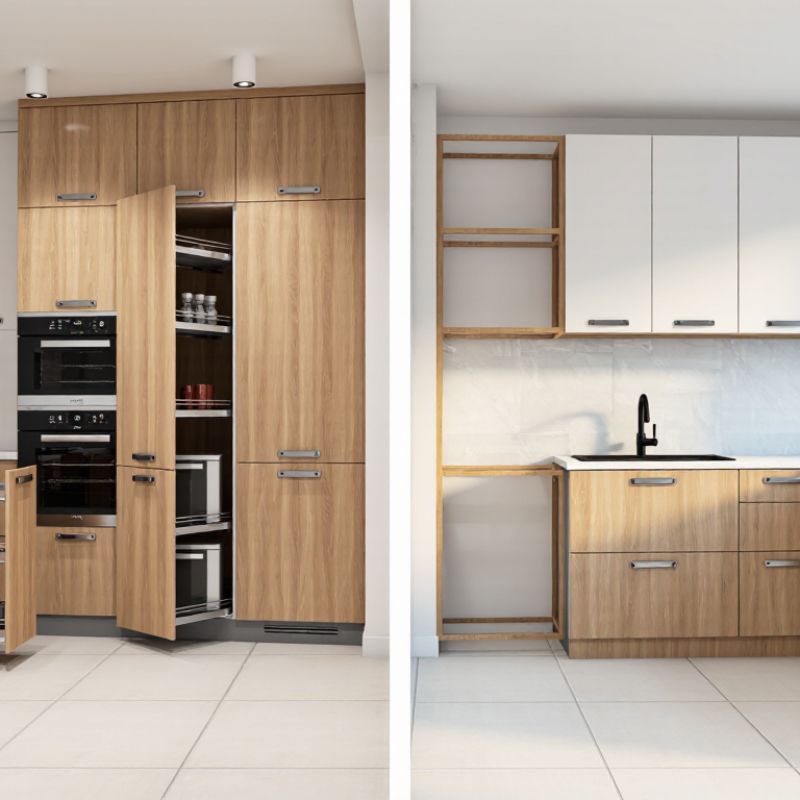
Custom cabinets are built for your exact walls, ceiling height, and storage habits. A designer can create a narrow spice drawer beside the oven or a deep pantry for large appliances. Experienced installers also consider plumbing, uneven floors, door clearances, and ventilation. This tailored approach can reduce wasted space, but it usually requires more planning, higher costs, and longer lead times.

Ready-made cabinets come in standard sizes and common finishes. They can simplify ordering and help control a renovation budget. They may also arrive quickly, which matters when your kitchen is already unusable. However, filler panels and awkward gaps can appear around corners or appliances. Small compromises become visible every day.

There is no perfect answer.

A reliable choice begins with accurate measurements, a realistic budget, and honest priorities. Review material quality, hardware strength, warranty terms, and installation support before deciding. A low price may lose its appeal if shelves sag or replacement parts are difficult to find. Custom work is not automatically superior either; poor design or careless installation can waste its advantages. The best cabinet solution fits both the room and the way you live in it.
How to Choose Between Custom and Ready Made Cabinets?

Defining Custom and Ready-Made Cabinets

Custom and ready-made cabinets solve different problems. Custom cabinets are designed for a specific room, wall, and storage plan. A cabinet professional measures unusual corners, uneven floors, ceiling heights, and appliance clearances before production. Materials, finishes, drawer depths, and interior fittings can also be selected individually. This flexibility usually brings a higher price and longer installation schedule.

Ready-made cabinets follow standardized widths, heights, and depths. They are manufactured in advance and sold through common size ranges. That makes them faster to source and easier to budget. However, small gaps may appear beside walls or appliances. Fillers can hide them, but they may reduce useful storage. The labels are not perfectly standardized. Some suppliers call semi-custom products “ready-made,” so specifications deserve careful checking.

The 2024 Houzz U.S. Kitchen Trends Study reported that 76% of renovating homeowners replaced all their cabinets. That scale makes accurate classification important. The National Kitchen and Bath Association’s 2024 market outlook also continues to identify cabinetry as a major remodeling expense. In practice, I compare the room’s measurements with each cabinet’s actual dimensions, not its showroom appearance. A ready-made cabinet can work beautifully in a square room. A custom cabinet may be justified by one awkward chimney or sloping wall. Still, custom work is not automatically better. Mistakes in measurements, finishes, or hardware can become expensive. Ask for written drawings, material specifications, lead times, and installation tolerances before approving the order.

Comparing Design Options, Materials, and Construction

Choosing between custom and ready-made cabinets starts with honest space planning. Design should serve your daily habits, not only photographs.

Ready-made cabinets offer fixed widths, familiar layouts, and faster installation. They suit standard walls with few obstacles. Custom cabinets can follow uneven corners, tall ceilings, or unusual plumbing locations. In a narrow kitchen, a shallow cabinet may protect walking space. However, custom design can add complexity without improving function. I have seen simple layouts work better than crowded, expensive ones.

Tips: Tape cabinet outlines on the floor. Check door swings. Measure appliances twice. Ask for material samples in daylight. Compare storage before comparing finishes.

Material choice affects appearance, strength, and maintenance. Plywood boxes usually resist moisture better than particleboard. Medium-density fiberboard creates a smooth painted surface, but damaged edges need careful protection. Solid wood offers character, although it can move with humidity. Small imperfections may appear over time. That is normal, but poor construction is not.

Inspect drawer joints, hinges, shelf thickness, and the cabinet back. Ready-made units often use standardized parts, making replacement easier. Custom cabinets may provide stronger joinery and more precise fitting. Still, quality varies between workshops.

Ask how corners are joined, how finishes are cured, and how installers handle uneven walls. A beautiful door cannot fix a weak cabinet box. Inspect the details closely.

Evaluating Costs, Lead Times, and Installation Requirements

How to Choose Between Custom and Ready Made Cabinets?

Evaluating Costs, Lead Times, and Installation Requirements

Custom cabinets usually cost more because each unit is measured, designed, and built for your room. They can solve awkward corners, uneven walls, and unusual appliance spaces. In my project experience, accurate measurements matter more than attractive drawings. One misplaced pipe can change the entire plan.

Ready-made cabinets often have lower purchase prices and shorter lead times. Some can arrive within days, while custom orders may require several weeks. However, check what the price excludes. Delivery, filler panels, handles, and countertop preparation can increase the final cost. The cheaper option can become expensive. I have seen rushed purchases leave narrow gaps beside walls, which later needed extra trim.

Tips: Ask for a written, itemized quotation. Confirm delivery dates before removing existing cabinets. Measure doorways, stairways, and ceiling heights. For installation, ready-made units may suit confident DIY homeowners, but leveling several cabinets takes patience. Custom units still need professional fitting, especially around plumbing and electrical points. Leave access for future repairs. A beautiful cabinet is not practical if a technician cannot reach the shutoff valve. Also, allow a small schedule buffer. Delays happen, and planning without one is optimistic.

Matching Cabinet Types to Your Space and Lifestyle

Choosing between custom and ready-made cabinets should begin with your daily routines, not only your room measurements. Houzz’s 2024 U.S. Kitchen Trends Study reports that 76% of renovating homeowners upgrade cabinets or drawers. That demand reflects a practical need: better storage, easier access, and smoother movement.

Ready-made cabinets suit standard walls, fixed budgets, and faster installation. They work well for renters, first-time renovators, or households with simple storage needs. Measure carefully around doors, windows, appliances, and plumbing. A narrow 12-inch pullout can hold oils beside the cooktop, while deep drawers can keep heavy pans below the preparation zone. Small details matter.

Custom cabinets become valuable when your space has sloping ceilings, uneven walls, or unusual corners. They can also support specific routines, such as a baking station, accessible handles, or concealed recycling bins. NKBA’s 2024 Kitchen Trends Report highlights storage, durability, and easy maintenance as major planning priorities. Still, custom does not guarantee better results. I have seen beautiful cabinetry waste space because the interior layout was never tested. A simple cardboard mock-up may reveal that a tall pantry blocks the refrigerator. That mistake is easy to miss. Your best choice should match your cooking habits, household size, installation timeline, and tolerance for compromise.

How to Choose Between Custom and Ready Made Cabinets? - Matching Cabinet Types to Your Space and Lifestyle

Decision Factor Custom Cabinets Ready-Made Cabinets Best Match for Your Space or Lifestyle
Fit and dimensions Built to the exact width, height, and depth of the room. Available in standard sizes; fillers may be needed around walls and corners. Choose custom for irregular walls, sloped ceilings, narrow areas, or unusual layouts. Choose ready-made for standard room dimensions.
Typical cabinet widths Can be specified in very small increments to reduce unused space. Common base cabinet widths are generally offered in standard increments, often beginning around 9 inches and increasing by 3-inch steps. Ready-made cabinets work well when appliances, plumbing, and wall lengths align with standard increments.
Storage efficiency Maximizes storage by using the available wall and floor area more precisely. Provides practical storage but may leave gaps or require additional filler panels. Custom is useful for avid cooks, large households, or anyone needing specialized storage. Ready-made suits moderate storage needs.
Design flexibility Offers broad control over materials, finishes, door styles, internal accessories, and hardware locations. Offers a limited selection of finishes, configurations, and accessories from the available range. Choose custom when appearance or specialized organization is a priority. Choose ready-made when simplicity and speed matter more.
Typical material options May include solid wood, plywood, medium-density fiberboard, and wood veneer, depending on the specification. Commonly uses engineered wood, particleboard, medium-density fiberboard, laminate, thermofoil, or veneer components. Custom allows closer control of construction and finish. Ready-made provides a practical choice for budget-conscious projects.
Indicative cost range Often about $500–$1,200 or more per linear foot installed, depending on materials, construction, and labor. Often about $100–$300 per linear foot for cabinets, with installation and modifications priced separately. Ready-made is generally better for a controlled budget. Custom may offer better value when wasted space would otherwise be significant.
Lead time Commonly takes several weeks to several months, including design, production, delivery, and installation. May be available immediately or within a shorter ordering period, although delivery and installation can add time. Ready-made is suitable for quick renovations, rental properties, and projects with firm deadlines.
Installation complexity Usually requires careful measuring, planning, and professional installation. Often simpler to assemble and install, but leveling, scribing, fillers, and trim still require skill. Ready-made may suit experienced DIY renovators. Custom is better when precision installation is important.
Accessibility and special needs Can incorporate accessible heights, pull-out shelves, reduced-depth units, and customized hardware placement. May offer a few adaptable accessories, but dimensions and configurations are less flexible. Custom is generally the stronger choice for wheelchair access, limited reach, mobility concerns, or highly specific routines.
Repair and replacement Replacement parts may need to be specially made, especially for unique doors, panels, or finishes. Standardized components can be easier to replace, provided the same product line remains available. Ready-made may be preferable for homeowners who value straightforward future repairs.
Environmental considerations Precise sizing can reduce unused material and demolition waste, but production may require more made-to-order resources. Standardized production can be efficient, but unused fillers, packaging, and replacement parts may create additional waste. Compare material certifications, durability, repairability, and disposal plans rather than judging by cabinet type alone.
Overall recommendation Best for long-term ownership, unusual spaces, detailed design goals, and maximum personalization. Best for standard layouts, lower initial cost, faster completion, and straightforward storage requirements. Measure the room, define your budget and deadline, list your storage habits, and then select the option that solves your highest-priority needs.

Note: Cost ranges and lead times are broad industry estimates in U.S. dollars. Actual prices vary by region, materials, room size, design complexity, delivery, and installation requirements.

Making the Final Cabinet Selection for Your Project

Choosing cabinets becomes clearer when the final selection follows the room’s actual demands, not attractive drawings. I measure wall widths, door swings, plumbing points, appliance clearances, and daily storage habits. A 24-inch-deep cabinet may suit a narrow walkway, while a deeper unit can waste valuable circulation space. Ready-made cabinets offer predictable dimensions, faster availability, and easier replacement. Custom cabinets solve awkward corners, sloping ceilings, and unusual appliance gaps. Yet custom work requires careful drawings and more time.

At the selection stage, I compare three practical records: verified measurements, material samples, and a written quote. The quote should identify panel thickness, hardware, finish, installation scope, delivery timing, and adjustment policies. A sample viewed under showroom lighting can look different beside a window. Check it there. I also open doors and drawers repeatedly. Smooth movement, even gaps, and stable hinges reveal more than photographs. A cabinet can look impressive and still feel inconvenient.

My own mistake was prioritizing a dramatic finish before testing storage capacity. The kitchen looked refined, but tall pans had nowhere comfortable to stand. That changed my process. I now place paper outlines on the floor and mark shelf heights with tape. If the budget is tight, combine standard units with one or two custom pieces. This may not create a perfectly uniform appearance. It can improve function without forcing every cabinet into a tailored solution. Leave room for doubt. Confirm lead times and installation responsibilities before signing.

How to Choose Between Custom and Ready-Made Cabinets?

Typical residential planning benchmarks for making the final cabinet selection

Ready-made cabinets generally offer shorter lead times and more predictable budgets because they use standardized sizes and finishes. Custom cabinets typically require a longer production period and a higher budget, but they provide greater flexibility for unusual room dimensions, specialized storage, and personalized design requirements. Actual timelines and costs vary by project scope, materials, location, and installer availability.

FAQS

What is the main difference between custom and ready-made cabinets?

Custom cabinets are designed for specific walls, corners, and storage needs. Ready-made cabinets use standard widths, heights, and depths. Custom options offer flexibility. Ready-made options usually arrive faster.

When are custom cabinets worth considering?

Consider them for sloping ceilings, uneven walls, awkward corners, or unusual appliance spaces. They can use difficult areas efficiently. However, custom work is not automatically better. Poor measurements can create expensive corrections.

Are ready-made cabinets suitable for small kitchens?

They can work well in square rooms with predictable dimensions. Standard units simplify planning and replacement. Small gaps may appear near walls or appliances. Filler panels can hide gaps but reduce storage.

Which cabinet option usually costs less?

Ready-made cabinets usually have lower purchase prices. Custom cabinets cost more because each unit is measured and built individually. Delivery, handles, fillers, and installation can change the final price. The cheaper choice can become expensive.

How long might cabinet installation take?

Ready-made cabinets may arrive within days. Custom orders can require several weeks. Installation still takes time for leveling, trimming, and adjustments. Add a schedule buffer. Delays happen.

What measurements should be checked before ordering?

Measure wall widths, ceiling heights, doorways, stairways, and appliance clearances. Record plumbing and electrical positions. Check door swings and walking space. One misplaced pipe can change the entire plan.

How can homeowners test cabinet practicality?

Open doors and drawers repeatedly before approval. Check smooth movement, even gaps, and stable hinges. Mark shelf heights with tape. Paper outlines on the floor can reveal cramped walkways.

What should a written cabinet quotation include?

It should list materials, panel thickness, hardware, finishes, delivery, installation, and adjustment policies. Confirm lead times in writing. Ask who handles countertop preparation. Do not rely on showroom impressions alone.

Can standard and custom cabinets be combined?

Yes, combining them can control costs. Use standard units for regular walls and custom pieces for difficult areas. The appearance may not be perfectly uniform. Function may improve more than visual consistency.

What common cabinet-planning mistake should be avoided?

Do not choose a dramatic finish before testing storage capacity. Tall pans need comfortable vertical space. I once prioritized appearance and regretted it. Attractive cabinets can still feel inconvenient.

Conclusion

Choosing the right cabinets begins with understanding what is the difference between custom and ready-made cabinets. Custom cabinets are built to suit your exact measurements, preferred layout, storage needs, finishes, and design style, making them ideal for unusual spaces or highly personalized projects. Ready-made cabinets are produced in standard sizes and styles, offering a simpler and often more affordable solution with faster availability.

The decision should also consider materials, construction quality, total cost, lead times, and installation requirements. Custom options may require a larger budget and longer production schedule, while ready-made cabinets can reduce waiting time but may require adjustments or filler pieces during installation. Consider your room’s dimensions, daily routines, storage habits, renovation timeline, and willingness to coordinate installation. By balancing appearance, function, durability, and budget, you can select the cabinet type that best supports both your space and lifestyle.

Liam

Liam

Liam is a dedicated marketing professional with a profound expertise in the industry, where he excels at highlighting the unique advantages of our core products. With a keen understanding of market trends and consumer needs, Liam frequently updates our company’s professional blog, providing......