A humid kitchen is a daily materials test. Steam reaches cabinet edges, grout lines, hinges, and countertop seams. The U.S. Environmental Protection Agency recommends keeping indoor relative humidity between 30% and 50%. Kitchens can exceed that range quickly during boiling, dishwashing, and drying. Moisture also becomes more damaging when ventilation is weak.
This guide examines what materials are best for humid environments in kitchens, using practical performance rather than appearance alone. On renovation sites, small details often decide durability. A sealed plywood edge can remain stable, while an exposed particleboard corner may swell after repeated splashes. Porcelain, quartz, stainless steel, ceramic tile, and properly finished hardwood each offer different advantages. None is perfect. Even quartz needs careful seam installation, and grout still requires regular cleaning.
Industry guidance supports a measured approach. ASHRAE Standard 62.2 emphasizes effective residential ventilation for controlling indoor pollutants and moisture. The National Kitchen and Bath Association also identifies ventilation, durable surfaces, and water-resistant construction as important kitchen planning concerns. The 2024 Houzz U.S. Kitchen Trends Study shows that homeowners continue investing in upgraded countertops, storage, and functional improvements. However, popularity does not equal moisture resistance. That assumption deserves reconsideration.
The following discussion compares materials by absorption, swelling risk, maintenance, repairability, and installation quality. It also considers the details people overlook, including unsealed cutouts beneath sinks and water trapped behind appliances. Good materials help. Good detailing matters more. A humid kitchen needs both.
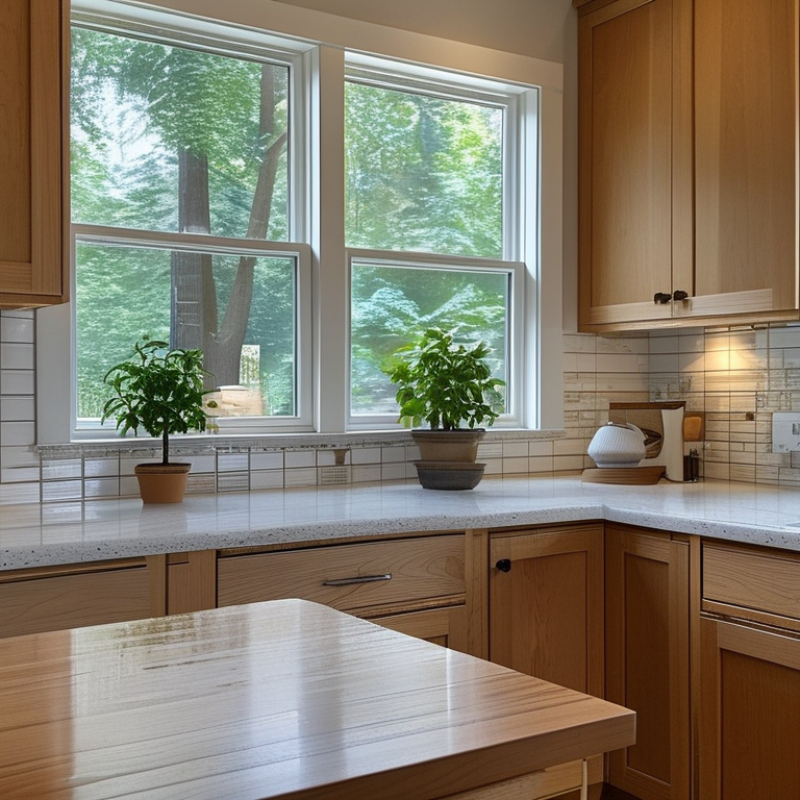
What Materials Are Best for Humid Kitchen Environments?
Humidity Challenges in Kitchen Environments
Warm steam, splashing water, and poor airflow can stress kitchen materials every day. Moisture often collects behind cabinets, beneath sinks, and around cooking areas. These hidden spots may stay damp long after the countertop feels dry.
Porcelain tile works well for floors and walls because it absorbs very little water. Sealed natural stone can also perform reliably, but its sealant needs regular inspection. Stainless steel handles humidity effectively and is easy to clean. Quartz surfaces resist moisture because they have a low-porosity structure. Still, the joints deserve attention. Water can enter through poorly sealed edges.
Cabinet construction needs careful thought. Marine-grade plywood usually handles humidity better than standard particleboard. Solid wood can last, but it may expand or contract with seasonal moisture changes. Ventilated cabinet bases help air move around plumbing. Small details matter.
Moisture wins quickly.
I have seen attractive kitchens fail because the sink cabinet had no airflow. A slow leak caused swollen panels within months. That experience changed how I assess materials: surface resistance is not enough. Installation, sealing, ventilation, and maintenance matter just as much. Even durable materials need wiping, prompt repairs, and periodic checks with a simple moisture meter. No material is perfect, and material choices should reflect the kitchen’s cooking habits, climate, and ventilation quality.
| Material | Moisture Resistance | Heat and Steam Performance | Best Kitchen Applications | Key Advantages | Limitations and Care Requirements | Overall Suitability |
|---|---|---|---|---|---|---|
| Porcelain Tile | Excellent | Handles routine heat and steam well when correctly installed. | Floors, walls, backsplashes, and areas behind sinks. | Very low water absorption, hard surface, durable, and available in many finishes. | Grout joints can absorb moisture and require sealing or regular maintenance. The surface may be slippery when wet unless a suitable slip-resistant finish is selected. | Excellent |
| Ceramic Tile | Very Good | Performs well around normal cooking heat and humidity. | Walls, backsplashes, and low-impact floor areas. | Noncombustible, easy to clean, and generally more economical than many natural stones. | Water resistance depends on the tile body, glaze, installation, and grout. Chips or cracks should be repaired to prevent moisture intrusion. | Very Good |
| Quartz Composite | Excellent | Suitable for typical countertop use, but prolonged direct heat can damage the resin binder. | Countertops, islands, and splash-prone work surfaces. | Nonporous surface, low routine maintenance, and good resistance to stains and everyday moisture. | Use trivets for hot cookware. Seams and cutouts still need proper installation, and harsh abrasive cleaners may dull the finish. | Excellent for countertops |
| Stainless Steel | Excellent | Strong performance near steam, heat, and frequent washing. | Worktops, sinks, shelves, range surrounds, and commercial-style splash zones. | Nonporous, corrosion-resistant, hygienic, and easy to sanitize. | Can show fingerprints, water spots, and scratches. Chloride-containing cleaners and steel wool may promote surface damage or corrosion staining. | Excellent |
| Solid Surface | Very Good | Suitable for normal kitchen temperatures; direct high heat should be avoided. | Integrated countertops, sinks, backsplashes, and seamless work areas. | Nonporous, repairable in many cases, and capable of minimizing seams that can collect moisture. | Can scratch or scorch more easily than stone or porcelain. Use cutting boards and heat protection. | Very Good |
| Tempered Glass | Excellent | Handles ordinary steam and cooking heat; avoid sudden extreme temperature changes. | Backsplashes, cabinet doors, and protective wall panels. | Nonporous, easy to wipe clean, resistant to staining, and available in large seamless panels. | Edges and corners require careful installation. Although stronger than ordinary glass, it can still break under severe impact. | Very Good |
| Natural Stone | Good with sealing | Many types tolerate normal kitchen heat, but thermal shock and direct heat can still cause damage. | Countertops, floors, walls, and decorative backsplashes. | Durable appearance, good heat resistance in many varieties, and a wide range of textures and colors. | Porous stones can absorb water, oils, and stains. Selection, sealing, spill removal, and periodic resealing depend on the stone type and finish. | Good |
| Marine-Grade or Exterior-Grade Plywood | Good when sealed | Acceptable for cabinetry when protected from direct heat and persistent steam. | Cabinet boxes, sink-base construction, and shelving with sealed edges. | More dimensionally stable than standard particleboard when exposed to occasional moisture; strong screw-holding ability. | It is not waterproof by itself. All faces, edges, cutouts, and joints must be sealed, and leaks should be fixed quickly. | Good for cabinetry |
| High-Pressure Laminate | Good on the surface | Suitable for normal kitchen use when kept away from prolonged direct heat. | Cabinet fronts, worktops, wall panels, and splashbacks. | Decorative, easy to clean, and resistant to everyday surface moisture when properly bonded. | Water can enter through exposed edges, seams, or damaged areas and swell the substrate beneath. Use heat protection and maintain edge seals. | Good with careful detailing |
| Solid Hardwood | Moderate with protection | Can tolerate normal kitchen conditions but should not be exposed to prolonged steam or standing water. | Decorative cabinet fronts, butcher-block worktops, and trim. | Repairable, visually warm, and capable of lasting a long time with suitable finishing. | Wood expands and contracts with changes in moisture. Seal all surfaces and edges, wipe spills promptly, and maintain the finish. | Moderate |
Practical guidance: In humid kitchens, material selection should be combined with effective ventilation, a properly functioning range hood, sealed joints and edges, prompt leak repair, and adequate drying after cleaning. Moisture-resistant materials can still fail when water remains trapped behind cabinets, countertops, flooring, or wall finishes.
: Porcelain tile handles splashes, steam, and frequent mopping well. Its water absorption is typically 0.5% or lower. Check the product sheet. Textured surfaces improve grip, but deep grooves can hold grease.
Sheet vinyl has fewer seams, so water has fewer entry points. However, it is not automatically waterproof. Poorly sealed edges can damage the subfloor. Inspect seams carefully.
Engineered wood adds warmth, but standing water may swell its inner layers. I would avoid it directly beside a sink. That preference is not perfect, because comfort and appearance still matter.
Moisture-resistant plywood works well for cabinet boxes when edges are sealed. PVC panels also tolerate humidity and clean easily. Avoid untreated particleboard near sinks. One hidden leak can expand it overnight.
Solid wood can work with a durable finish and good ventilation. It naturally moves as seasonal moisture changes. Expect movement. Door gaps may need occasional adjustment.
Quartz resists stains and moisture because its surface is nonporous. Its seams still require skilled installation. Porcelain handles heat and steam effectively, but fitting can chip sharp edges.
Laminate is practical and affordable, but exposed edges can absorb water. Seal edges thoroughly, especially beside the sink. A small gap matters.
Seal transitions and movement joints carefully. Ask installers about subfloor moisture testing. Keep mop water controlled, and repair leaks quickly. Check the cabinet floor every few months. Good ventilation remains essential.
Humid kitchens face constant exposure to steam, splashes, condensation, and temperature changes, so material selection should focus on moisture resistance, durability, and easy maintenance. For walls and ceilings, nonporous surfaces with mold-resistant finishes can help prevent staining and moisture damage. Flooring should provide a stable, slip-resistant foundation while tolerating frequent cleaning and occasional standing water. When considering what materials are best for humid environments in kitchens, options for cabinets and countertops should resist swelling, warping, peeling, and water absorption. Sealed surfaces, high-quality laminates, treated wood alternatives, and dense countertop materials can offer reliable performance when properly installed.
Ventilation is equally important because even the most durable materials can deteriorate in trapped humidity. Choose surfaces with minimal seams, maintain effective airflow, and inspect joints, edges, and plumbing areas regularly. Proper sealing, prompt drying, and routine cleaning will extend the life of kitchen materials, reduce mold risks, and preserve the appearance and functionality of the space over time.

 Bashan Living