Choosing among China’s best kitchen cabinet types requires more than comparing colors, prices, and glossy finishes. Cabinets face steam, splashes, grease, heat, and daily impact. Solid wood, plywood, stainless steel, and moisture-resistant particleboard each perform differently. The right choice depends on ventilation, cleaning habits, room humidity, and installation quality. A beautiful cabinet can still fail beside a leaking sink.
Tom Silva, veteran general contractor and This Old House expert, offers a practical warning: “Water is wood’s worst enemy.” His advice reflects years of repair experience. Small leaks can swell cabinet edges within days. Unsealed cutouts may absorb moisture like a sponge. Hinges can loosen when doors repeatedly slam. These details explain why how to prevent damage in kitchen cabinets begins before installation, not after visible problems appear.
This guide examines cabinet materials, edge sealing, hardware, ventilation, and everyday maintenance. It also considers common choices from Chinese manufacturers, including lacquered MDF, plywood, solid wood, and aluminum systems. Wipe spills quickly. Check plumbing connections monthly. Keep hot appliances away from unprotected panels. Simple actions matter. Yet prevention is never perfect. Even careful owners miss a hidden drip or delayed repair. That uncomfortable truth deserves attention. We will identify realistic protection methods, explain where each cabinet type may fail, and challenge assumptions about “waterproof” construction. Marketing language can sound stronger than real performance. A cabinet should be judged by its core material, joints, finish, and installation details._eta
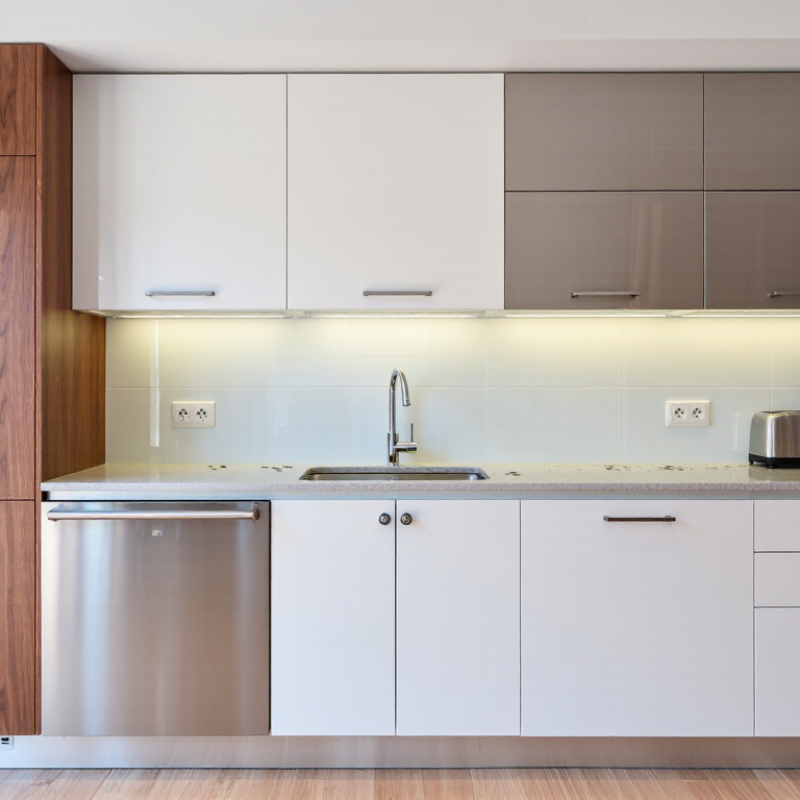
Chinese kitchen cabinets commonly use solid wood, plywood, MDF, particleboard, and stainless steel. Each material serves a different kitchen environment. Solid wood provides natural grain and strong visual appeal. Plywood handles screws well and resists movement better than many board products. MDF creates smooth painted doors, while particleboard keeps costs controlled. Stainless steel suits commercial kitchens and moisture-heavy spaces.
Door styles also vary widely. Shaker doors remain practical because their simple frames are easy to clean. Flat-panel doors create a modern appearance and collect less dust. Many manufacturers apply melamine, laminate, acrylic, or painted finishes. Edge sealing matters greatly. Poorly sealed edges can absorb steam near sinks and dishwashers. Small gaps become serious damage later.
Choose cabinets with moisture-resistant boards for wet zones. Ask for sealed cutouts around plumbing and appliance openings. Soft-closing hinges reduce repeated impact on doors and drawers. Adjustable legs can keep base cabinets away from damp floors. During installation, leave space for ventilation around appliances. Inspect panel thickness, edge bands, hardware, and finish samples before production. No material is perfect. A high-grade door can still fail after careless installation. I have also seen attractive cabinets lose alignment because the wall was not measured accurately. That mistake deserves more attention. Good cabinet selection combines material quality, workshop inspection, packaging, and correct installation.
| Cabinet Type | Common Core Material | Typical Surface or Door Finish | Main Strengths | Common Damage Risks | Recommended Prevention Measures | Suitable Use |
|---|---|---|---|---|---|---|
| Solid Wood Cabinets | Hardwood or softwood components | Paint, stain, or clear protective coating | Natural appearance, repairable surface, and good structural life when properly sealed | Moisture movement, warping, cracking, dents, and finish discoloration | Seal all faces and edges, keep indoor humidity stable, wipe spills quickly, and avoid prolonged direct heat | Traditional, premium, and custom kitchens |
| Plywood Cabinets | Cross-laminated wood veneers | Veneer, laminate, paint, or acrylic panel | Good screw-holding strength, dimensional stability, and favorable moisture resistance compared with particleboard | Unsealed edges, delamination, scratches, and swelling after prolonged water exposure | Use edge banding or waterproof sealant, protect sink-base areas, and repair chipped edges promptly | Heavy-use kitchens and humid environments |
| Medium-Density Fiberboard (MDF) Cabinets | Compressed wood fibers and resin | Thermofoil, paint, PET film, or laminate | Smooth surface, consistent machining quality, and suitable for painted or routed doors | Edge swelling, coating delamination, dents, and moisture damage at cutouts | Keep edges fully covered, seal sink and appliance cutouts, use soft-close hardware, and clean with a damp—not wet—cloth | Painted doors, decorative profiles, and dry-to-moderate kitchens |
| Particleboard Cabinets | Compressed wood particles and resin | Melamine, laminate, or PVC film | Cost-effective, lightweight, and available in many decorative finishes | Swelling, screw pull-out, edge chipping, and loss of strength after water penetration | Choose moisture-resistant grades where available, seal all exposed edges, install a leak tray, and prevent standing water | Budget-conscious projects and low-moisture areas |
| Melamine-Faced Cabinets | Usually particleboard or MDF core | Factory-fused melamine decorative paper | Uniform finish, easy cleaning, and good resistance to ordinary household stains | Chipped edges, impact damage, heat marks, and moisture entering joints | Apply durable edge banding, use trivets for hot cookware, avoid abrasive cleaners, and dry seams immediately | Contemporary kitchens and rental housing |
| Laminate Cabinets | MDF, particleboard, or plywood core | High-pressure laminate or compact decorative laminate | Broad design selection and good resistance to everyday wear and stains | Peeling at poorly bonded edges, scratches, heat damage, and moisture at seams | Specify quality adhesive and edge treatment, keep hot appliances away from panels, and clean spills promptly | High-traffic family kitchens and commercial-style layouts |
| Acrylic-Faced Cabinets | Typically MDF or particleboard core | Gloss or matte acrylic panel | Bright colors, modern appearance, and a smooth non-porous face that is easy to wipe | Visible fingerprints, fine scratches, edge separation, and discoloration from unsuitable chemicals | Use microfiber cloths, avoid abrasive pads and solvents, protect edges, and keep panels away from concentrated heat | Modern, minimalist, and high-visibility kitchen designs |
| PVC or Thermofoil Cabinets | Usually MDF-shaped door core | Vacuum-formed PVC film | Seamless appearance, easy routine cleaning, and suitability for curved or routed door profiles | Film lifting, discoloration, bubbling, and deformation from excessive heat or steam | Maintain ventilation, use heat shields near ovens and dishwashers, avoid steam buildup, and repair lifted film early | Raised-panel doors and cost-sensitive remodeling |
| Stainless Steel Cabinets | Stainless steel sheet and welded or formed components | Brushed, polished, or powder-coated metal surface | High moisture resistance, non-combustible construction, and strong hygiene performance | Scratches, dents, fingerprints, tea staining, and corrosion from chlorides or harsh chemicals | Use a soft cloth, clean with the grain, avoid chlorine-based cleaners and steel wool, and dry the surface after washing | Professional, outdoor, humid, or heavy-duty kitchens |
| Bamboo Cabinets | Laminated bamboo panels | Clear coat, stain, or painted finish | Renewable material, distinctive grain, and good surface hardness when properly finished | Moisture movement, edge swelling, scratches, and finish wear near sinks | Seal all edges, maintain stable humidity, use cutting boards, and prevent water from pooling on horizontal surfaces | Eco-conscious residential interiors and modern kitchens |
General damage-control priorities: control moisture, seal exposed edges and cutouts, provide ventilation around heat-producing appliances, use non-abrasive cleaners, and adjust hinges or drawer hardware when misalignment appears.
Plywood boxes resist swelling and hold screws securely. Seal every exposed edge. No material is fully waterproof.
Yes, especially for painted doors. It handles moisture better than standard MDF. However, it can still absorb water.
Install a waterproof liner or aluminum tray beneath plumbing connections. Wipe spills quickly. A small leak can swell an unsealed panel within days.
It offers strong resistance to stains and scratches. It suits families with frequent cooking. Edges still need careful sealing.
Solid wood expands and contracts as humidity changes. Leave proper expansion space during installation. Tight panels may crack or rub.
Moisture, heat, excessive weight, and careless cleaning cause most damage. Steam can weaken unfinished surfaces. Water finds small gaps.
Use a soft, damp cloth, then dry the surface immediately. Avoid strong solvents. I once ignored a small splash; the edge lifted months later.
Uneven walls can twist cabinet boxes and strain hinges. Upper cabinets need secure wall support. Ordinary screws alone may not be enough.
Ask suppliers for current emission-compliance documents and test reports. Do not rely on “eco-friendly” wording alone. The paperwork matters.
Inspect hinges, seals, and plumbing connections every few months. Keep ventilation space around appliances when possible. Small checks prevent bigger repairs.
Chinese kitchen cabinets are available in several practical forms, including framed and frameless designs, wall-mounted and base cabinets, plywood or particleboard units, and cabinets finished with laminate, acrylic, or painted surfaces. Choosing durable materials requires attention to moisture resistance, board density, edge sealing, hardware quality, and the cabinet’s suitability for the kitchen environment. Solid construction and properly protected surfaces can improve service life and reduce maintenance needs.
Understanding how to prevent damage in kitchen cabinets begins with controlling moisture, heat, heavy loads, and careless use. Sinks, dishwashers, and plumbing should be checked regularly to prevent leaks, while ventilation helps reduce humidity and swelling. Avoid placing hot cookware directly on cabinet surfaces, distribute weight evenly, and close doors and drawers gently. Routine cleaning with a soft, slightly damp cloth, prompt removal of spills, periodic inspection of hinges and handles, and timely repair of loose edges or damaged seals can help keep cabinets functional, attractive, and long-lasting.

 Bashan Living