How to Assess PVC Furniture Material Benefits in 2026?

Time:2026-10-22 Author:Oliver
0%

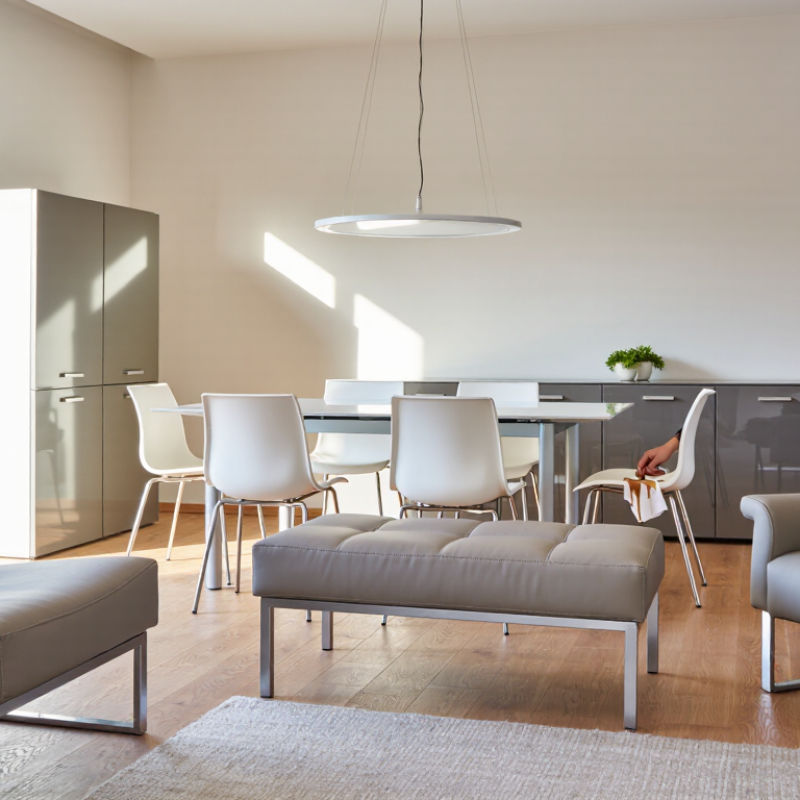
Assessing PVC furniture in 2026 requires more than checking its price or glossy appearance. Buyers should ask, “what are the benefits of PVC-based furniture materials?” The answer depends on construction, formulation, and intended use. PVC can resist moisture, stains, abrasion, and everyday spills. That makes it practical for dining chairs, upholstered benches, cabinets, and healthcare seating. A damp cloth often removes coffee marks without complicated treatment.

Durability matters in real rooms. A PVC surface should survive repeated sitting, edge contact, and occasional dragging. During evaluation, inspect seams, corner wrapping, backing fabric, and surface thickness. Test samples under sunlight when possible. Cheap material may crack, discolor, or feel excessively sticky. That is an uncomfortable detail, but it matters.

Environmental scientist and former Greenpeace director Dr. Patrick Moore has described PVC as “one of the most versatile and useful plastics ever invented.” His statement explains PVC’s broad application, but it should not end the assessment. Formulation quality still matters. Ask about plasticizers, indoor emissions, fire performance, recycled content, and end-of-life options. Relevant certifications can strengthen confidence, yet certificates do not replace physical inspection.

PVC can offer consistent color, affordable maintenance, and strong moisture resistance. It may also support longer furniture service life. Still, “low maintenance” does not mean maintenance-free. Wipe spills quickly. Avoid harsh solvents. Compare the material with polyurethane, coated textiles, leather, and recycled alternatives. The best choice balances comfort, safety, durability, appearance, and verified environmental information. Some conclusions will remain imperfect. Good assessment accepts that uncertainty.
How to Assess PVC Furniture Material Benefits in 2026?

What Is PVC Furniture Material?

PVC means polyvinyl chloride, a thermoplastic made from chlorine, carbon, and hydrogen. Furniture manufacturers soften it with plasticizers or keep it rigid with stabilizers and fillers. Rigid PVC appears in cabinet panels, drawer components, and edge profiles. Flexible PVC becomes coated fabric for chairs, benches, and headboards. That surface may resemble leather, but it is not genuine leather.

Grand View Research estimated the global PVC market at about USD 45.8 billion in 2023. The OECD Global Plastics Outlook reported approximately 460 million tonnes of plastic production in 2019. These figures show PVC’s industrial scale, not automatic furniture quality. In practical specification work, I check thickness, surface adhesion, edge sealing, and resistance to abrasion. A thin decorative film can look excellent under showroom lighting. It may still peel around a frequently used handle. The word “waterproof” is often too generous. PVC resists splashes, but joints, drilled holes, and damaged edges can admit moisture. Testing against ISO 4892-3 can also help evaluate artificial weathering, especially for furniture near windows. PVC is practical, cleanable, and often economical. It is not always the most breathable upholstery surface. It can also feel cold against skin. Those small details matter during daily use.

How to Assess PVC Furniture Material Benefits in 2026?

What Is PVC Furniture Material? PVC furniture material is made from polyvinyl chloride, a thermoplastic polymer commonly used in furniture surfaces, panels, edge bands, upholstery coatings, and molded components. It is valued for moisture resistance, easy cleaning, and flexible design options, but it can soften under high heat and should be evaluated for durability, recyclability, and indoor air-quality compliance.

Assessment guide: The chart uses a practical 1–5 score, where 5 indicates a stronger benefit for typical furniture applications. PVC performs especially well in moisture resistance and cleanability, while heat resistance and end-of-life sustainability require more careful material selection and responsible recycling.

How PVC Furniture Materials Are Made and Classified

PVC furniture material begins as PVC resin powder blended with plasticizers, stabilizers, pigments, and processing aids. It starts as powder. Heat and pressure create a workable compound. Manufacturers then form it through extrusion, calendaring, molding, or lamination. A rigid profile may become a chair frame, while a flexible sheet can cover a seat or cabinet panel. Foamed PVC adds a lighter interior and a softer touch.

Classification depends on structure and use. Rigid PVC offers shape stability for boards, trims, and support parts. Flexible PVC suits upholstery, edge wrapping, and protective surfaces. Semi-rigid grades sit between them. Surface treatments create matte, embossed, wood-like, or smooth finishes. Laminated sheets usually combine a printed decorative layer with a PVC backing. Co-extruded products may place harder and softer layers together.

When assessing benefits in 2026, examine the whole construction, not only the surface. Check thickness, backing strength, seam quality, scratch resistance, odor, and cleaning performance. Ask for test data on durability and emissions when indoor use matters. Moisture resistance is useful, but it does not excuse poor joints or trapped water. The surface can mislead. A glossy finish may hide weak backing material. Small flaws matter. In practice, samples should face repeated wiping, bending, sunlight exposure, and edge inspection. My own assessment would remain cautious because performance varies greatly between formulations and manufacturing controls.

Which Benefits Does PVC Offer for Furniture Applications?

How to Assess PVC Furniture Material Benefits in 2026?

PVC offers practical benefits for many furniture applications. It resists moisture, stains, and everyday splashes better than several porous materials. This makes it useful for kitchen cabinets, bathroom storage, office desks, and children’s furniture. Its smooth surface also allows quick cleaning with a soft cloth and mild detergent. In workshop evaluations, PVC surfaces often maintain consistent color and texture during regular indoor use. Manufacturers can produce many finishes, including wood-like grains, matte colors, and subtle stone effects. These options support flexible interior design without requiring expensive natural materials.

PVC is also lightweight and relatively easy to process. That can reduce installation effort and material waste. However, it is not perfect. Heat, sharp objects, and poor edge sealing may cause visible damage. Lower-quality products can yellow, peel, or release unpleasant odors over time. Performance depends on thickness, additives, bonding methods, and indoor conditions. Buyers should request test data instead of trusting appearance alone. I have found that a beautiful sample can hide weak edges.

Tips: Check the surface under bright light. Press the corners gently and inspect the backing. Ask about heat resistance, cleaning limits, and expected service life. Compare samples after exposure to water and household stains. Also consider end-of-life handling, because PVC disposal can be difficult in some regions. A balanced assessment should include cost, durability, maintenance, and environmental responsibilities.

How to Assess PVC Furniture Material Benefits in 2026? - Which Benefits Does PVC Offer for Furniture Applications?

Assessment Dimension Typical PVC Material Indication Furniture Benefit Application Relevance Key Limitation or Risk Recommended Verification
Moisture Resistance High
Rigid PVC has very low water absorption, commonly below 0.5% by mass for many sheet and profile formulations.
Helps resist swelling, rotting and moisture-related dimensional changes. Suitable for bathroom cabinets, kitchen components, utility furniture and humid indoor environments. Water resistance does not prevent failure at poorly sealed edges, joints, fastener holes or laminate interfaces. Test water absorption, edge swelling and joint leakage using the intended finished construction.
Chemical and Stain Resistance Generally high
Resistant to many diluted household acids, alkalis, salts and cleaning solutions.
Surfaces are easier to clean and less likely to show permanent staining from common spills. Useful for tables, shelving, bathroom furniture, laboratory support furniture and retail fixtures. Strong solvents, concentrated chemicals, prolonged contact or harsh disinfectants may discolor, soften or craze the surface. Conduct a 24–96 hour spot test with the actual cleaners, disinfectants and cosmetics used in service.
Impact Performance Formulation-dependent
Rigid PVC can be tough, but impact strength varies with additives, thickness, temperature and structure.
Can provide durable panels, edge components and lightweight furniture parts when properly designed. Appropriate for moderate-use cabinets, partitions, drawer components and interior panels. Unmodified or thin PVC may become more brittle at low temperatures or under sharp impact. Measure notched impact strength and perform drop, corner-impact and cyclic-use tests on finished parts.
Scratch and Abrasion Resistance Moderate to high
Depends strongly on surface coating, texture, print layer and protective finish.
Can maintain appearance under normal household handling and routine cleaning. Suitable for cabinet fronts, wall panels, shelving and decorative furniture surfaces with an appropriate finish. Glossy or soft surfaces may show scratches, scuffs and gloss changes from sand, metal objects or abrasive cleaners. Use abrasion, scratch, gloss-retention and cleaning-cycle tests on the final surface system.
Dimensional Stability Good within normal indoor conditions
Thermal expansion is higher than that of wood-based panels and metals.
Supports consistent panel appearance when expansion gaps and suitable fixing methods are used. Important for large doors, long shelves, wall cladding and modular furniture systems. Heat, uneven support and restrained movement can cause bowing, joint stress or deformation. Assess expansion, warpage and joint movement through humidity and temperature cycling.
Temperature Capability Limited compared with metals
Many rigid PVC furniture products are intended for ordinary indoor temperatures; prolonged heat exposure can soften or deform them.
Performs reliably in normal residential and commercial interiors when kept away from high heat. Suitable for indoor furniture, but caution is needed near ovens, heaters, radiators, hot pipes and direct solar glazing. High temperatures can accelerate deformation, discoloration, plasticizer migration or loss of stiffness. Confirm the supplier’s continuous-use temperature and test heat deflection in the complete furniture design.
Weight and Handling Moderate density
Rigid PVC is commonly around 1.3–1.45 g/cm³, while foamed or hollow structures can be considerably lighter.
Can reduce handling effort when cellular, hollow or thin-wall designs are used. Beneficial for movable cabinets, lightweight partitions, display units and flat-pack components. Solid PVC is not inherently lightweight; excessive thinness may reduce screw-holding and impact performance. Compare mass per finished panel, load capacity and fastener pull-out strength rather than density alone.
Design and Surface Flexibility High
Can be produced in opaque colors, textures, gloss levels and printed or laminated finishes.
Enables consistent color, decorative effects and coordinated furniture interiors. Useful for contemporary cabinets, decorative panels, edge profiles and customized interior systems. Color matching, gloss variation and surface defects can occur between production batches or finishing systems. Approve physical samples and specify color tolerance, gloss range, texture and visual inspection criteria.
Fabrication and Machining Good processability
Can be cut, drilled, routed, thermoformed, welded or mechanically fastened depending on the grade.
Supports efficient production of shaped panels, profiles, trims and integrated furniture details. Suitable for routed doors, edge profiles, formed components and modular assemblies. Heat generated during machining may melt edges; unsuitable adhesives or fasteners may reduce joint reliability. Check cut quality, edge finish, weld strength, adhesive compatibility and assembly-cycle performance.
Hygiene and Maintenance Good for non-porous surfaces
Closed, smooth PVC surfaces do not readily absorb liquids.
Reduces liquid penetration and simplifies routine wiping and sanitation. Useful for healthcare support furniture, childcare interiors, kitchens, bathrooms and commercial interiors. Textured surfaces, seams and damaged coatings can retain dirt; hygiene performance depends on the finished design. Evaluate cleanability, disinfectant compatibility, seam design and microbial-surface claims using applicable standards.
Fire Performance Grade-dependent
PVC contains chlorine and may self-extinguish in some formulations, but burning can produce smoke and corrosive gases.
Some formulations can meet defined flame-spread or smoke requirements when tested as a complete product. Relevant for public, commercial, transportation-adjacent or high-occupancy interiors where fire regulations apply. Performance depends on additives, thickness, backing, installation and the specific regulatory test; generic PVC should not be assumed compliant. Require fire classification reports for the exact finished assembly and target jurisdiction.
Indoor Air Quality Formulation-dependent
Emissions vary with residual monomer, additives, plasticizers, inks, adhesives and surface treatments.
Low-emission grades and well-controlled finishing systems can support healthier indoor environments. Important for bedrooms, schools, healthcare facilities, offices and tightly sealed buildings. Odor and VOC emissions may increase with new products, heat or poor ventilation; performance cannot be judged from the word “PVC” alone. Request emissions testing for the finished furniture system and verify compliance with the applicable indoor-air specification.
Service Life and UV Exposure Good indoors; variable outdoors
UV stabilizers and pigments affect color retention and long-term mechanical performance.
Can provide a long service life in protected indoor applications with normal maintenance. Suitable for indoor furniture; outdoor use requires a specifically stabilized grade and suitable design. Unstabilized or poorly protected PVC may fade, chalk, embrittle or lose impact strength under prolonged sunlight. Use accelerated weathering and color-change testing, then compare results with the intended exposure category.
Recyclability and Circularity Technically recyclable, system-dependent
PVC can be mechanically recycled, but collection, sorting, contamination and additive composition affect feasibility.
Long service life and recycled-content options can reduce material demand when supported by an appropriate recovery system. Relevant for demountable furniture, standardized profiles and designs that can be separated at end of use. Composite laminates, adhesives, mixed polymers and legacy additives can make recycling more difficult. Document recycled content, component separability, take-back routes and end-of-life processing capability.
Cost and Supply Stability Usually cost-efficient
Cost varies with resin prices, additives, reinforcement, thickness, finishing and fabrication.
Can provide a practical balance of moisture resistance, appearance and manufacturability. Useful when consistent decorative surfaces and low routine maintenance are priorities. Lowest initial price may conceal higher costs from specialized hardware, replacement parts, emissions controls or disposal. Compare total cost of ownership, including fabrication, maintenance, replacement, logistics and end-of-life handling.

Assessment note: Values are typical industry indications for PVC-based furniture components and are not universal specifications. Final performance depends on resin type, additives, thickness, surface finish, construction method, installation conditions and applicable test standards.

How to Evaluate PVC Furniture Quality and Performance

How to Assess PVC Furniture Material Benefits in 2026?

Evaluating PVC furniture quality starts with the material, not its color or shine. Run your fingers across the surface and check for bubbles, ripples, or uneven coating. A consistent texture usually indicates controlled manufacturing. Inspect corners closely. Poorly sealed edges may lift after repeated cleaning or humidity changes. Ask for the PVC thickness, core material, and independent test reports. These details reveal more than attractive product photographs.

Performance testing should reflect daily use. Place a sample near sunlight and check whether its color changes over time. Bend a coated edge gently, but avoid excessive force. Cracking or whitening suggests weak flexibility. A chair seat should resist pressure without permanent deformation. For tables, examine scratch resistance with ordinary household contact, not exaggerated tools. Also check odor in a closed room for several hours. Strong smells deserve further investigation. Safety data should explain emissions and chemical composition clearly.

I once trusted a smooth finish too quickly. It looked durable, yet the edge failed first. That mistake still matters. Real evaluation needs repeated handling, not one showroom inspection. Clean a small area with mild detergent, then observe dullness, swelling, or stickiness. Results can vary between batches. Request current production data rather than relying on an old certificate. A low price may be reasonable, but unexplained savings require careful questions about thickness, backing, testing, and expected service life.

What Environmental and Safety Factors Should Be Considered?

PVC furniture can offer practical benefits in 2026. It resists moisture, cleans easily, and performs well in humid rooms. However, durability does not automatically mean sustainability. The OECD’s Global Plastics Outlook reports 353 million tonnes of plastic waste in 2019, with only 9% recycled. This figure covers all plastics, not PVC alone. Still, it exposes a serious industry challenge. Buyers should request recycled-content evidence, product-life estimates, and realistic end-of-life instructions.

The OECD’s Global Plastics Outlook reports 353 million tonnes of plastic waste in 2019, with only 9% recycled.

Safety requires more than checking a material label. Testing should cover phthalates, heavy metals, residual monomers, and volatile organic compounds. The European Chemicals Agency restricts several phthalates above 0.1% in certain articles. Suppliers should provide current compliance documents, not outdated declarations. WHO indoor-air guidance sets formaldehyde at 0.1 mg/m³ over 30 minutes. PVC itself is not usually the only emission source; adhesives, printing layers, and coatings may matter more. Ventilate new furniture before indoor use.

PVC itself is not usually the only emission source; adhesives, printing layers, and coatings may matter more.

Look closely at construction details. A sealed edge is safer than an exposed, brittle cut. Stable hardware also reduces replacement waste. UNEP’s 2023 Turning off the Tap report estimates that plastic pollution could fall 80% by 2040 through reuse, recycling, and better design. That target is ambitious. PVC furniture recycling remains complicated when films, foam, metal, and additives are bonded together. I would not accept a “recyclable” claim without collection routes and documented processing capacity. More honest assessment is needed.

FAQS

What is PVC furniture material?

PVC means polyvinyl chloride, a thermoplastic made from chlorine, carbon, and hydrogen. It starts as powder.

Where is PVC used in furniture?

Rigid PVC appears in cabinet panels, drawer parts, and edge profiles. Flexible PVC covers chairs, benches, and headboards.

Does PVC furniture look like real leather?

Flexible PVC can imitate leather through embossing and surface finishes. It is not genuine leather.

Is PVC furniture waterproof?

PVC resists splashes, but joints, drilled holes, and damaged edges may admit moisture. “Waterproof” can be too generous.

How should PVC furniture quality be checked?

Inspect thickness, edge sealing, surface adhesion, backing strength, and scratch resistance. Test a sample before buying many pieces.

Is PVC comfortable for daily seating?

PVC upholstery is easy to wipe and handles moisture well. It may feel cold and less breathable against skin.

What safety information should suppliers provide?

Request current tests for phthalates, heavy metals, residual monomers, and volatile organic compounds. Old paperwork is not enough.

Is PVC furniture environmentally friendly?

Its environmental impact depends on service life, recycled content, design, and disposal access. Recycling becomes harder when foam, metal, films, and additives are bonded together.

How can new PVC furniture be prepared for indoor use?

Ventilate the furniture before regular indoor use. Check odors, coatings, adhesives, and printed layers, not only the PVC label.

What maintenance helps PVC furniture last longer?

Wipe spills promptly and avoid harsh abrasion. Inspect handles and edges often. Small flaws can grow.

Conclusion

PVC furniture material is a versatile synthetic material made by combining polyvinyl chloride resin with stabilizers, plasticizers, pigments, and other performance-enhancing additives. It can be produced as flexible films, coated fabrics, rigid boards, edge bands, or molded components, allowing manufacturers to tailor it for upholstery, cabinetry, tables, storage units, and decorative surfaces. Its classification generally depends on flexibility, structure, surface finish, thickness, and intended application.

When asking “what are the benefits of PVC-based furniture materials,” key advantages include moisture resistance, easy cleaning, design flexibility, consistent appearance, lightweight construction, and generally good resistance to abrasion and everyday stains. However, quality should be evaluated through thickness uniformity, adhesion, surface durability, dimensional stability, odor, and resistance to heat and chemicals. Buyers should also consider whether the material meets relevant safety requirements, uses responsible additives, and supports recycling or controlled disposal. A balanced assessment should compare service life, maintenance needs, indoor air considerations, and environmental impact rather than focusing only on initial cost.

Oliver

Oliver

Oliver is a seasoned marketing professional with a wealth of expertise in driving brand awareness and engagement. With a deep understanding of our company's product offerings, he consistently delivers high-quality content that enriches our professional blog. His insights not only shed light on......